

Introduction to Hepatitis B Virus and Pregenomic RNA
Chronic infection with the Hepatitis B virus remains one of the most serious global infectious diseases and continues to represent a major burden on public health systems worldwide. This hepatotropic DNA virus belongs to the family Hepadnaviridae and is strongly associated with progressive liver disorders, including chronic hepatitis, liver fibrosis, cirrhosis, hepatic failure, and hepatocellular carcinoma (HCC). Hundreds of millions of individuals worldwide live with persistent HBV infection, and complications associated with chronic hepatitis B contribute to nearly one million deaths annually.
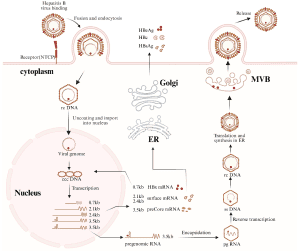
HBV exhibits a highly specialized replication strategy that enables long-term persistence within hepatocytes. Viral entry into liver cells is initiated through interactions with cellular receptors such as the sodium taurocholate cotransporting polypeptide (NTCP) and heparan sulfate proteoglycans (HSPGs). After penetration into the host cell, the viral nucleocapsid transports the partially double-stranded relaxed circular DNA (rcDNA) genome into the nucleus. There, rcDNA undergoes enzymatic repair and conversion into covalently closed circular DNA (cccDNA), which functions as the central transcriptional template responsible for viral persistence.
Among the transcripts produced from cccDNA, pregenomic RNA (pgRNA) occupies a central role in the HBV life cycle. pgRNA acts simultaneously as:
- The template for reverse transcription into viral DNA
- The messenger RNA for synthesis of viral core and polymerase proteins
- A regulator of viral persistence and replication efficiency
- A potential biomarker reflecting intrahepatic cccDNA activity
Because pgRNA directly reflects transcriptional activity originating from cccDNA, it has emerged as one of the most promising biomarkers for evaluating viral activity, treatment response, and disease progression in chronic hepatitis B.
Molecular Biology of HBV Pregenomic RNA
Formation and Function of pgRNA
HBV replication is unique among DNA viruses because it involves reverse transcription through an RNA intermediate. Once cccDNA is established in the hepatocyte nucleus, host RNA polymerase II transcribes several viral RNAs of different lengths. The longest transcript generated is the 3.5 kb pregenomic RNA.
This pgRNA possesses dual functionality within infected cells. First, it serves as messenger RNA for the translation of the HBV core protein and viral polymerase. Second, it acts as the replication intermediate that will eventually be reverse transcribed into viral DNA.
The pgRNA contains a highly conserved encapsidation signal known as epsilon (ε), a stem-loop RNA structure essential for viral replication. HBV polymerase specifically recognizes and binds this epsilon structure, initiating the encapsidation process whereby pgRNA and polymerase become packaged into newly formed nucleocapsids composed of HBV core proteins.
Inside the nucleocapsid, reverse transcription begins. HBV polymerase synthesizes the minus-strand DNA using pgRNA as template. This complex process includes multiple template switches, strand transfers, and maturation events that eventually generate relaxed circular DNA or double-stranded linear DNA genomes.
The mature nucleocapsid then follows one of two pathways:
- Acquisition of an envelope containing hepatitis B surface antigens (HBsAg), resulting in secretion of infectious virions
- Recycling of rcDNA back into the nucleus to replenish the cccDNA pool
This intracellular recycling mechanism contributes significantly to viral persistence and makes complete eradication of HBV extremely difficult.

Host Factors Regulating pgRNA Stability and Encapsidation
Cellular Proteins Involved in HBV RNA Regulation
HBV replication does not rely solely on viral proteins. Numerous host cellular factors participate in regulating pgRNA stability, translation, and encapsidation.
Several RNA-binding proteins interact directly with HBV RNA and influence viral replication efficiency. Among the most important is the La protein, which stabilizes HBV RNA transcripts by binding specific cis-acting RNA elements. This interaction protects viral RNA from degradation and enhances replication competency.
Another important factor is the polypyrimidine tract-binding protein, which binds the HBV posttranscriptional regulatory element (PRE). This interaction promotes efficient viral gene expression and RNA processing.
Heat shock proteins, particularly Hsp90, also play essential roles in HBV replication. Hsp90 facilitates proper folding and stabilization of HBV polymerase, enabling formation of the polymerase-pgRNA complex necessary for nucleocapsid assembly.
These host-virus interactions demonstrate that HBV replication is highly dependent on cellular molecular machinery. Understanding these interactions may create opportunities for novel antiviral therapies targeting host factors instead of viral proteins alone.
Reverse Transcription and Viral DNA Synthesis
Mechanisms of HBV Genome Replication
HBV replication involves one of the most sophisticated reverse transcription systems among animal viruses.
The process begins when HBV polymerase binds the epsilon stem-loop of pgRNA. Polymerase then initiates synthesis of minus-strand DNA using a bulge structure within epsilon as the template.
After synthesis of a short DNA oligonucleotide, the nascent DNA strand undergoes template switching toward the direct repeat 1 (DR1) sequence located near the 3′ end of pgRNA. DNA synthesis subsequently resumes and continues across the entire pgRNA template.
As reverse transcription proceeds:
- pgRNA is progressively degraded
- Single-stranded DNA intermediates form
- Relaxed circular DNA genomes mature
- Double-stranded linear DNA may occasionally be generated
The HBV ribonuclease H (RNase H) domain plays a critical role during this process by degrading RNA strands within RNA-DNA hybrids. Failure of RNase H activity interrupts viral DNA synthesis and prevents formation of mature viral genomes.
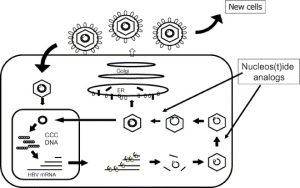
This dependence on reverse transcription explains why nucleos(t)ide analogs effectively suppress HBV replication, although they fail to completely eliminate cccDNA reservoirs.
pgRNA as a Marker of cccDNA Activity
Clinical Importance of Serum HBV RNA
One of the greatest challenges in chronic hepatitis B management is accurate assessment of intrahepatic cccDNA activity. Liver biopsy remains invasive and unsuitable for routine monitoring. Consequently, there has been strong interest in identifying noninvasive biomarkers reflecting cccDNA transcriptional activity.
Serum HBV pgRNA has emerged as one of the most promising candidates.
Unlike serum HBV DNA, which mainly reflects completed reverse transcription products, pgRNA represents active transcription directly originating from cccDNA. Therefore, serum pgRNA may provide more accurate information regarding residual viral transcription during antiviral therapy.
Studies have shown that:
- Serum pgRNA strongly correlates with intrahepatic cccDNA activity
- pgRNA levels are highest during HBeAg-positive chronic infection
- pgRNA decreases progressively during effective antiviral treatment
- Persistent pgRNA positivity may indicate ongoing cccDNA transcription despite undetectable HBV DNA
This distinction is clinically important because many patients receiving nucleos(t)ide analog therapy achieve undetectable serum HBV DNA while retaining active cccDNA within hepatocytes.
As a result, pgRNA may serve as:
- A marker of residual viral transcription
- A predictor of relapse after treatment withdrawal
- A tool for evaluating functional cure
- An indicator of therapeutic response
pgRNA and Chronic Hepatitis B Disease Progression
Association with Liver Inflammation and Fibrosis
Serum HBV RNA levels vary significantly during different phases of chronic HBV infection. Elevated pgRNA levels are commonly associated with immune-active disease phases characterized by increased viral replication and hepatic inflammation.
Clinical studies have demonstrated strong correlations between serum pgRNA concentrations and:
- Necroinflammatory liver injury
- Fibrosis severity
- Viral replication activity
- Histopathological progression
These findings suggest that pgRNA may become a valuable noninvasive biomarker for assessing liver disease severity.
Interestingly, the ratio between HBV DNA and HBV RNA differs according to viral genotype. Certain genotypes exhibit more efficient reverse transcription, resulting in higher DNA-to-RNA ratios.
This genotype-dependent variability may influence disease progression and therapeutic response, emphasizing the importance of personalized approaches in HBV management.

Role of pgRNA in Hepatocellular Carcinoma
HBV RNA and Tumor Biology
HBV contributes to carcinogenesis through multiple mechanisms, including chronic inflammation, genomic instability, and viral DNA integration into host chromosomes.
Integrated HBV DNA frequently loses the ability to generate pgRNA but may continue producing viral proteins such as HBsAg. Persistent HBsAg production from integrated DNA contributes to immune dysregulation and chronic liver injury even when cccDNA transcription decreases.
Interestingly, pgRNA and cccDNA have also been detected in hepatocellular carcinoma tissues. Tumors positive for pgRNA often exhibit:
- Better cellular differentiation
- Lower proliferative activity
- Reduced microvascular invasion
- Improved patient survival
HBV RNA may additionally participate in oncogenesis through interactions with host microRNAs.
Interaction Between HBV RNA and MicroRNAs
Epigenetic and Posttranscriptional Regulation
HBV RNAs can function as molecular sponges that sequester host microRNAs and disrupt cellular regulatory networks.
Several microRNAs normally suppress HBV replication by targeting pgRNA sequences. However, HBV proteins such as HBx can downregulate these antiviral microRNAs, promoting viral persistence.
One of the most important liver-specific microRNAs is miR-122. This microRNA:
- Suppresses HBV replication
- Regulates hepatocyte differentiation
- Controls oncogenic signaling pathways
- Enhances interferon-mediated antiviral responses
Reduced miR-122 expression is frequently observed in hepatocellular carcinoma and contributes to tumor progression.
Similarly, dysregulation of let-7 family microRNAs by HBV infection may promote activation of oncogenic targets such as c-Myc and HMGA2.
These findings illustrate how pgRNA contributes not only to viral replication but also to epigenetic dysregulation and liver carcinogenesis.

pgRNA and Current Antiviral Therapies
Nucleos(t)ide Analogs and Viral Persistence
Current approved therapies for chronic hepatitis B include:
- Pegylated interferon alpha
- Nucleos(t)ide analogs such as entecavir and tenofovir
Nucleos(t)ide analogs inhibit HBV polymerase and effectively block reverse transcription of pgRNA into DNA. As a consequence, serum HBV DNA often becomes undetectable.
However, these drugs do not directly inhibit cccDNA transcription or pgRNA synthesis. Therefore:
- pgRNA may remain detectable during treatment
- cccDNA reservoirs persist
- Viral relapse frequently occurs after therapy discontinuation
This explains why functional cure rates remain relatively low despite long-term antiviral suppression.
Persistent serum pgRNA during treatment indicates ongoing cccDNA activity and may predict relapse risk after cessation of therapy.
pgRNA as a Predictor of Treatment Response
Clinical Utility in Therapy Monitoring
Emerging evidence suggests that pgRNA kinetics may help clinicians optimize antiviral therapy decisions.
Patients who eventually achieve HBeAg seroconversion often demonstrate:
- Faster decline in serum pgRNA
- Lower residual pgRNA levels
- Greater suppression of cccDNA transcription
Similarly, low pgRNA levels during interferon therapy are associated with improved treatment responsiveness.
Monitoring pgRNA may therefore help identify:
- Patients likely to respond to therapy
- Candidates for treatment discontinuation
- Individuals at risk of relapse
- Patients approaching functional cure
Such applications could improve individualized HBV management strategies.
Novel Antiviral Strategies Targeting pgRNA
Core Assembly Modulators
Core assembly modulators (CAMs) represent one of the most promising new therapeutic classes in HBV research.
These agents interfere with:
- Capsid assembly
- pgRNA encapsidation
- Polymerase packaging
- cccDNA recycling
Several CAM families are currently under development, including:
- Heteroaryldihydropyrimidines (HAPs)
- Phenylpropenamides (PPAs)
- Sulfamoylbenzamides (SBAs)
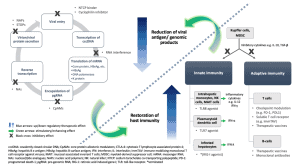
Unlike traditional nucleos(t)ide analogs, CAMs may suppress both HBV DNA and pgRNA production simultaneously.
RNA Interference Therapies
Silencing HBV Transcripts
RNA interference (RNAi) technologies are designed to degrade HBV RNA transcripts directly within hepatocytes.
Small interfering RNAs (siRNAs) can target conserved regions shared by all HBV RNAs, enabling simultaneous suppression of:
- Viral protein synthesis
- pgRNA production
- HBsAg expression
- Viral replication
Several investigational RNAi therapeutics have shown encouraging preclinical and clinical results.
The major challenge remains efficient delivery of siRNA molecules to all infected hepatocytes.
HBV RNase H Inhibitors
Emerging Antiviral Targets
HBV RNase H inhibitors represent another innovative therapeutic strategy.
By inhibiting RNase H activity:
- RNA degradation during reverse transcription is blocked
- Viral DNA synthesis becomes incomplete
- Replication intermediates accumulate
- Production of infectious virions decreases
Experimental RNase H inhibitors have demonstrated reductions in:
- Serum HBV RNA
- Intrahepatic HBV RNA
- HBsAg expression
These findings highlight the growing importance of pgRNA-focused antiviral strategies.

Relationship Between pgRNA and Other HBV Biomarkers
Comparative Diagnostic Value
Serum pgRNA shows important correlations with several traditional and emerging HBV biomarkers, including:
- HBV DNA
- HBsAg
- HBcrAg
- Intrahepatic cccDNA
However, pgRNA may provide unique advantages because it reflects transcriptionally active cccDNA rather than integrated HBV DNA.
This distinction becomes especially relevant during antiviral therapy, where HBV DNA may become undetectable while cccDNA remains active.
Combining pgRNA measurements with HBV DNA and HBcrAg may improve monitoring accuracy and enhance prediction of treatment outcomes.
Limitations and Future Perspectives
Challenges in Clinical Application
Despite promising findings, several important questions remain unresolved.
Current limitations include:
- Lack of standardized pgRNA quantification assays
- Genotype-dependent variability
- Lower detectability in HBeAg-negative patients
- Limited pediatric data
- Incomplete understanding of pgRNA-containing virions
Further multicenter prospective studies are needed to validate the clinical utility of serum pgRNA monitoring.
Future research will likely focus on:
- Standardized diagnostic assays
- Integration of pgRNA into treatment guidelines
- Combination biomarker strategies
- Development of curative therapies targeting cccDNA and pgRNA
Conclusion
Pregenomic RNA has emerged as a central molecular component in the biology, persistence, and clinical management of chronic hepatitis B infection. Beyond serving as the replication intermediate of HBV, pgRNA provides valuable insight into intrahepatic cccDNA transcriptional activity and viral persistence.
Increasing evidence supports the use of serum pgRNA as a promising biomarker for monitoring antiviral therapy, predicting treatment response, assessing relapse risk, and evaluating progression toward functional cure.
Furthermore, novel therapeutic approaches targeting pgRNA synthesis, encapsidation, and reverse transcription are transforming the future landscape of HBV treatment. Core assembly modulators, RNA interference agents, and RNase H inhibitors may collectively provide new opportunities to achieve durable viral suppression and potentially complete HBV cure.
As HBV research continues to evolve, pgRNA is expected to become an increasingly important component of precision medicine strategies aimed at improving long-term outcomes for patients with chronic hepatitis B.